

Concrete Admixtures: A Comprehensive Guide to Superplasticizers and Their Game-Changing Roles in Construction
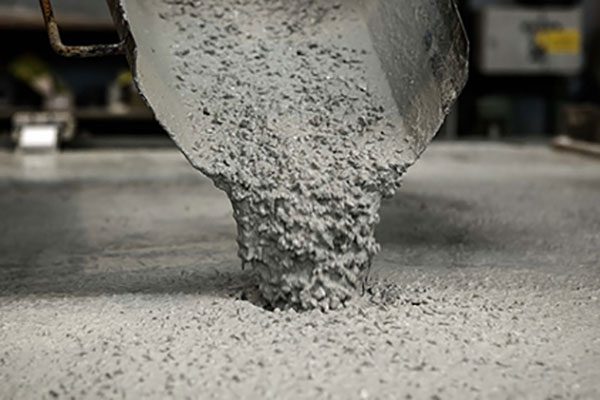
Zhengzhou, Henan Jan 14, 2026 (Issuewire.com) - Concrete is the backbone of modern construction, from towering skyscrapers and durable bridges to residential homes and infrastructure projects. Yet, basic concrete composed of cement, water, and aggregates often falls short of meeting the complex demands of todays building standards. This is where concrete admixtures step in: specialized chemical or mineral additives that transform concretes properties, enhancing workability, strength, durability, and efficiency. Among the most widely used and impactful admixtures are concrete water reducers and retarders, which address critical challenges in concrete placement, curing, and long-term performance.
What Are Concrete Admixtures?
According to the Portland Cement Association, concrete admixtures are ingredients added to concrete immediately before or during mixingbeyond the basic trio of cement, water, and aggregatesdesigned to modify specific properties of fresh or hardened concrete. Their primary purposes include reducing construction costs, improving quality control, overcoming environmental challenges, and enabling specialized applications.
Admixtures are classified by their function, with five core categories recognized by industry standards (ASTM C494 and AASHTO M194):
- Air-entraining admixtures: Introduce microscopic air bubbles to improve freeze-thaw resistance and workability.
- Water-reducing admixtures: Reduce water content while maintaining workability, boosting strength and durability.
- Retarding admixtures: Slow the setting rate of concrete, critical for hot weather placement or large-scale projects.
- Accelerating admixtures: Speed up setting and hardening, ideal for cold weather or projects requiring rapid formwork removal.
- Superplasticizers (high-range water reducers): A subset of water reducers that deliver extreme water reduction (up to 40%) and enhanced fluidity.
Beyond these core types, specialty admixtures address niche needs, such as corrosion inhibition, shrinkage reduction, waterproofing, and coloring. The effectiveness of any admixture depends on factors like cement type, water-cement ratio (w/c), mixing time, temperature, and aggregate gradation.
Superplasticizers: The Power of High-Range Water Reduction
Superplasticizers, also known as high-range water reducers, are the most advanced and widely used water-reducing admixtures. Unlike standard water reducers, which typically reduce water content by 510%, superplasticizers can achieve water reduction rates of 1540%, making them indispensable for high-performance concrete applications. Their ability to create highly flowable concrete without compromising strength has revolutionized modern construction, enabling complex designs, dense reinforcement, and efficient placement.
How Do Superplasticizers Work? The Science Behind Dispersion
More On Starmediaplanet ::
- Simcardo Debuts the Largest Global eSIM Platform Reaching 290+ Destinations Worldwide
- Brianne Davis Releases Bold New Novel About Love After the Chaos Stops
- ‘THE BOSS OF HAMPTON BEACH “LAUNCHED JED POWER’S GRITTY DAN MARLOWE/Hampton Beach MYSTERY SERIES
- The Truth Lies in the Past: Mic Lowther’s Final Moorhouse Trilogy Exposes Deep Family Secrets and Raw Emotions
- Janise Tinsman: A Leader in Nursing Education and Patient Care at the University of Texas - El Paso
The key to superplasticizers performance lies in their ability to disperse cement particles effectively. When cement is mixed with water, van der Waals forces cause cement particles to cluster, trapping water within these clusters and reducing the mixtures workability. Superplasticizers act as dispersants by adsorbing onto the surface of cement particles and creating two complementary effects: electrostatic repulsion and steric hindrance.
Electrostatic repulsion: Most superplasticizers are anionic, so they attach to positively charged cement particles. This creates a negative charge on each particle, causing them to repel one another and break apart flocs.
Steric hindrance: Common in modern polycarboxylate ether (PCE) superplasticizers, involves long polymer chains extending from the cement particle surface. These chains act as physical barriers, preventing particles from re-clustering and maintaining dispersion over time.
This dual mechanism frees trapped water, increasing the concretes fluidity while allowing for a significantly lower water-cement ratio. A lower w/c ratio translates to higher strength, reduced porosity, and improved durabilitycritical for structures exposed to harsh environments, heavy loads, or chemical attack.
Types of Superplasticizers: From Traditional to High-Performance
Naphthalene sulfonate formaldehyde condensates (NSF): A traditional type with good water reduction (1525%) and cost-effectiveness. Widely used in general construction but prone to slump loss over time, limiting their use in long-distance transportation or large pours.
Melamine sulfonate formaldehyde condensates (MSF): Offer higher water reduction (2030%) than NSF and better slump retention. Common in precast concrete and high-strength applications but are more expensive and less compatible with certain cement types.
Polycarboxylate superplasticizer (PCE): The latest and most advanced generation. PCE superplasticizers deliver exceptional water reduction (2540%), superior slump retention, and wide compatibility with different cementitious materials. Their comb-like molecular structure allows for precise customization, making them ideal for self-compacting concrete (SCC), high-strength concrete (HSC), and green building projects. They also have lower dosages and are more environmentally friendly than traditional types.
Key Benefits of Superplasticizers in Construction
- Enhanced workability and placement efficiency:Highly flowable concrete (slump values of 200250 mm or more) eliminates the need for excessive vibration, reducing labor costs and ensuring full compactioneven in complex forms or dense reinforcement.
- Higher strength and durability:By reducing the w/c ratio, superplasticizers produce concrete with compressive strengths exceeding 80 MPa (11,600 psi), suitable for high-rise buildings, industrial floors, and prestressed concrete. Lower porosity also improves resistance to freeze-thaw cycles, chloride penetration, and carbonation, extending the structures service life.
- Reduced material costs and carbon footprint:Lower water content allows for reduced cement usage while maintaining strength, cutting material costs and reducing CO emissionscritical for meeting green building standards. For example, Fosrocs Conplast SP 430 helped set a Guinness World Record for the largest 24-hour concrete pour (32,315 m³) at the Polavaram Dam project, demonstrating efficiency at scale.
- Improved quality control:Consistent slump retention ensures concrete properties remain stable during transportation and placement, reducing the risk of cold joints, segregation, or bleeding.
- Enables specialized applications:Superplasticizers are essential for self-compacting concrete (SCC), which flows under its own weight without vibration, and ultra-high-performance concrete (UHPC), used in high-demand structures like earthquake-resistant buildings and long-span bridges.
Best Practices for Using Superplasticizers
To maximize the benefits of superplasticizers, follow these industry best practices:
- Conduct pre-project testing:Always test admixture compatibility with cement, aggregates, and other additives under job-site temperature conditions. Use trial batches to determine the optimal dosagetypically 0.21.0% of the total cementitious material weight.
- Control addition sequence:Most superplasticizers are added to the mixing water or during the final stages of mixing (post-addiion) to maximize dispersion. Avoid adding directly to dry cement, as this can reduce effectiveness.
- Monitor slump retention:For long-distance transit or large pours, select superplasticizers with good slump retention to prevent premature stiffening.
- Adjust for temperature:High temperatures accelerate slump loss, so increase dosage slightly in hot weather. In cold weather, ensure the admixture and concrete materials are above freezing to maintain performance.
- Comply with standards:Ensure superplasticizers meet ASTM C494 or AASHTO M194 specifications, which govern performance and quality.
Sustainability Trends in Concrete Admixtures
The construction industry is increasingly focused on sustainability and reducing carbon emissions, and concrete admixtures play a key role in this transition.
- Low-carbon and bio-based admixtures: Innovations like bio-based PCE superplasticizers and sulfonated polysaccharide derivatives reduce reliance on fossil fuels and lower carbon footprints. These admixtures meet the latest industry standards and are compatible with green building certifications like LEED.
- Reduced cement usage: Superplasticizers enable lower water-cement ratios, allowing for reduced cement content (by up to 30%) while maintaining strength. Since cement production accounts for ~8% of global CO emissions, this reduction has a significant environmental impact.
- Use of supplementary cementitious materials (SCMs):Admixtures like PCE superplasticizers improve compatibility with SCMs (fly ash, slag, silica fume), which replace cement and reduce carbon emissions. For example, starch-based superplasticizers are recommended for use with fly ash in large-volume concrete.
- Energy-efficient production: Admixture manufacturers are adopting low-energy production processes and renewable energy sources to reduce their carbon footprint.
- Longer service life: Admixtures that enhance durability extend the service life of concrete structures, reducing the need for repairs and reconstructionlowering lifecycle carbon emissions.
Source :Chemate Group
This article was originally published by IssueWire. Read the original article here.